
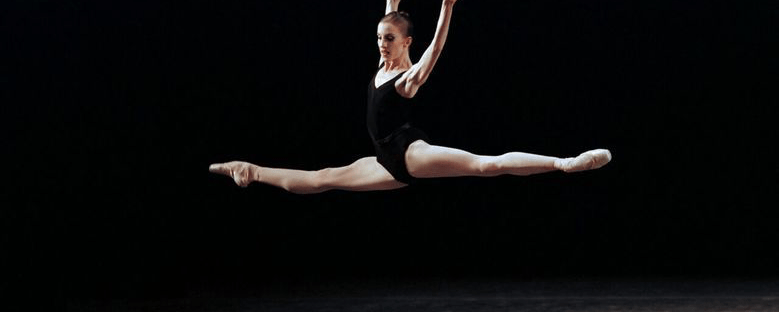
When I was seven and my Dad asked me what I wanted to be when I grew up, I replied “a ballerina in the morning, and a mountain climber/explorer in the afternoon”.
Some would say I had an issue with focus.
So when earlier this year I experienced a bout of what I suspected to be writer’s block proper for the first time, I wondered if this was that love/hate relationship with so-called focus coming back to haunt me.
It wasn’t. When I thought about it a little – instead of actually writing obviously – I realized that I’ve never lacked focus at all, it was just procrastination. And when I thought about that a little – still instead of writing – I realized at certain times I can procrastinate a lot. In work, in play, in everything I do.
So, it stands to reason, I then had to think about why I procrastinate.
Is it focus, motivation, an overactive, curious mind? For me, it’s actually all of those things, but (and here where it gets a little uncomfortable) I realized that at its foundation lay fear.
Whether fear of getting it wrong, FOMO, or something else… as I began to drill down a little and identify the times that procrastination hits, there it was. Subtle perhaps but in plain sight – fear was a common thread across each of the procrastination scenarios I find myself in.
And that’s why a little procrastination is a good thing.
It works as a quality controller, sanity checker and motivator all in one. And I’m far more productive for it.
So here’s my conclusions as to when and why I procrastinate, what I think it really means and what I do about it to actually make it work for me. It boils down to three scenarios:
1. When I’m missing something, or mistakingly believe I am
Let’s start with the most obvious. I may simply lack the knowledge or insight at first blush, I may hold off on asking for information and/or I may just not quite have cracked what it is I need to begin the work. Essentially there’s a quiet whiff of “I don’t quite get it”, and while I may not admit it right off the bat, I’m a little uncomfortable with that, which halts progress.
There’s a valid reason for this though; the idea that I produce something that isn’t thorough or authoritative on a subject matter, or miss the mark for an educated audience, won’t do. So if it’s a piece of work, say, that needs to be weighty and I don’t feel fully confident with the clout, I will procrastinate a little initially.
Often, while I’m trying to put my finger on the what I need to move forward, deadlines loom. Deadlines have a way of sharpening the mind. Rarely do I miss them (that in itself would be a failure), so they have a magical way of showing me if I’m missing something, and what it is, fast.
Sometimes the answer is suck it up, admit I need more information or I’d benefit from a sharper brief or additional feedback, and go get the god damn answers. No-one ever bats an eyelid when I do. And when I share the challenge or get that information, the work happens quick smart.
Sometimes – and more often than not – the answer is it’s time to just try, only to quickly realize that I was perfectly informed, capable and weighty enough all along.
Being able to tell which of these two solutions is right for the project in front of me can still be a little elusive at times, but in recognizing the “missing something” procrastination scenario, and applying deadlines, I’ve found a productive path to getting shit done, and getting it done well.
2. It’s just not that interesting and I’ve bored even myself
Seriously, sometimes it’s just not is it? There are days when I need to delve deep into the latest industry compliance regulations or find best practice stories in enterprise infrastructure choices and it’s just tough. There’s a refinjen blog post idea sitting in drafts, half written and rewritten at least twice, about the myth of inbox zero. It’s an interesting topic in theory, but geez if it bores me it’s sure as hell gonna bore whoever my audience is.
I’ve learned that whatever the topic, I have to find MY interest; my angle.
If I don’t, I procrastinate and/or the output is bland. I recently started the tactic of using the word “I” in my writing. It makes it easier to find a personal experience to tell the story – yes, even one about SEC cybersecurity compliance – and makes a world of difference to get things started.
While the end-result the audience gets very rarely contains the Finding Nemo cybersecurity analogy or the interesting ditty about WHAM lyrics it all began with, the personal interest served its purpose in developing that content (see point #3). And before I know it, I have a business-ready, best-practice whitepaper on my hands.
3. Way too many ideas mean way too much choice.
This is the killer. For me, the “issue” of focus has always boiled down to a genuine curiosity for a subject, many – sometimes conflicting – ideas happening at once, and a tendency to always try to be considered.
Two of my mentors, my high-school art teacher and my first PR Account Manager, recognized this in me. And both of them, separately and from different perspectives, taught me my most valuable lesson in procrastination: kill the white page.
I didn’t realize it, but the blank page was a huge barrier. I don’t want to make the wrong mark, so I hesitate, think some more, and procrastinate.
With the kill the white mantra I learned to make marks as quickly as possible. At least to start. I even learned to enjoy it. I now cover the page knowing I can always work on top, and knowing, in fact, that it just gets richer as I do. To this day I never paint on a white canvas, and I never try to write an article perfect-sentence by perfect-sentence. I just write my thoughts, I just make marks, and that’s how it begins.
It’s sometimes easy to forget that this is my process, and I should be confident in it.
Others go for word by word, line by line typing perfection. I now know I like to carefully consider my options, write/create in bursts, leave it set a while, reconcile my thoughts and then make it just so. By doing this, I remove any fear of getting it wrong; the fear that can stop me starting.
And yes, the blank page works both literally and metaphorically here.
In everything I do, personally and professionally, I’m only scared of getting it wrong – and so in danger of procrastinating – when I’m not in a position where I think I can have a good crack at something.
Being able to identify my three procrastination scenarios, puts me in the position where I can always be confident that I can have a bloody good crack. And that’s a win.
In short, I know I always need to:
1) Get rid of the blank page,
2) Feel confident with the information I have or do something about it, and;
3) Find a way to give a shit.
This helps me feel the fear and do it anyway, enables me to crack on and not put things off. We should all do a little bit more of that, right?
I’m a 30-something and, in case you were still wondering, I am not a ballerina, nor am I mountain climber. Maybe there’s a little case of the points #1-#3 in why that is, but let it also be said that I’ve climbed some pretty big mountains in my time, and I was a decent ballet dancer in my teens. And who says those days are over? (Well, possibly my easily tired middle-age muscles, but who listens to them anyway).
You see it turns out I’m still that seven year old with way too many ideas and too much choice and curiosity. And I reckon that can only be a good thing, I mean, the alternative would be boring, and we’ve established where boring gets us.
 Jen Manning | Go-to-Market Blog and Services